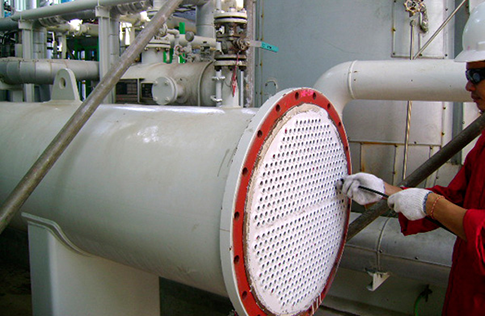
Eddy Current Tube Testing (ECT)
Eddy Current Tube Testing (ECT)
- Eddy Current Tube Testing (ECT) uses electromagnetic induction to find flaws like cracks, corrosion, pitting, and wall loss in conductive tubes (non-ferrous & some ferrous), widely used in power generation, petrochemicals, and aerospace for heat exchanger, boiler, and pipeline integrity, preventing leaks and failures by detecting defects rapidly, even through coatings, to ensure safety and efficiency.
Applications & Uses
- Heat Exchangers/Boilers: Inspects tubes in power plants (nuclear/fossil), petrochemical, and HVAC for leaks, corrosion, and wall thinning, preventing mixing of fluids.
- Oil & Gas : Checks pipelines, drilling components (drill pipes, casings) for cracks, corrosion, and wear in harsh conditions.
- Aerospace : Detects surface cracks, corrosion, and fatigue in aircraft tubing, landing gear, and engine parts.
- Crack Detection : Finding cracks in critical parts like train wheels, axles, and turbine blades.
- Manufacturing : Inspects tubes, wires, and bars for processing defects (rolling laps, inclusions) and cracks during production.
- Automotive Assesses engine parts, suspension, and other conductive components for defects.
- Material Analysis Measures material thickness, coating thickness, conductivity, and heat treatment variations.
Key Benefits
- High Speed:Fast inspection for large numbers of tubes.
- Non-Destructive:No damage to the tested component.
- Through Coatings:Can test through paint or other coatings.
- Sensitive:Excellent for detecting surface-breaking cracks and subtle wall loss.