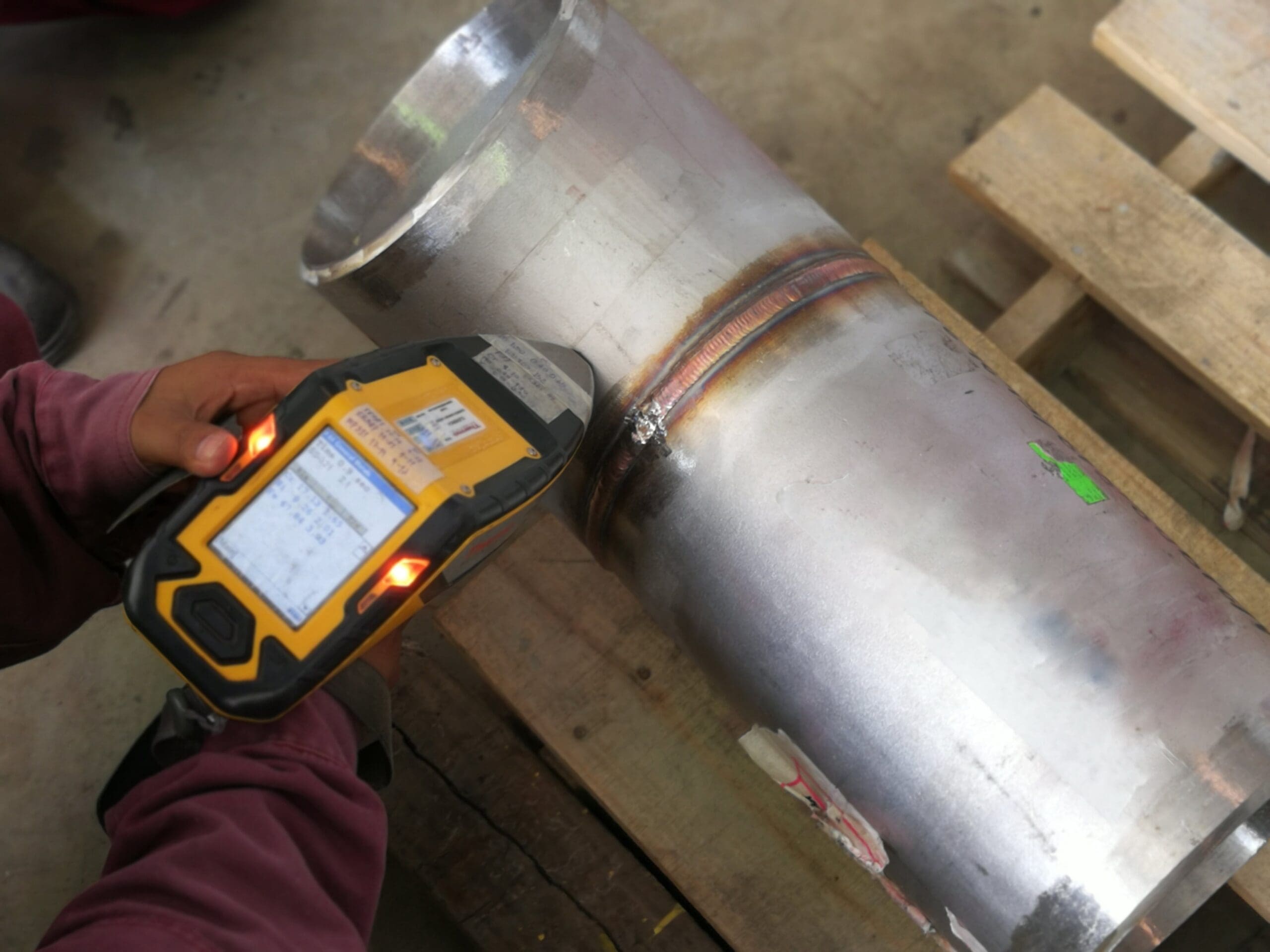
PMI( Positive Material identification)
PMI( Positive Material identification)
PMI stands for Positive Material Identification, a crucial, non-destructive testing (NDT) method used to verify the chemical composition and grade of metals and alloys. This testing ensures that materials used in critical applications match required specifications, thereby preventing material mix-ups, potential catastrophic failures, and ensuring safety and regulatory compliance.
.Key Uses and Applications
-
- PMI testing is vital across industries where material integrity is paramount, from raw material inspection to in-service asset management.
- Quality Control & Verification:It confirms that products, components, and raw materials conform to the correct standards and specifications, detecting mixed-up or counterfeit alloys.
- Weld Verification:It ensures that the correct base material and filler metal composition are used in welds, which is critical for structural integrity.
- Failure Analysis:In the event of a component failure, PMI can help determine if incorrect material was a contributing factor, aiding in root cause analysis.
- Asset Integrity Management:During plant maintenance and shutdowns in sectors like oil and gas or power generation, PMI is used to identify the composition of unknown or aging in-service materials to guide repair or replacement plans.
Regulatory Compliance: It helps companies comply with industry standards and government regulations, such as those outlined in API RP 578 for piping systems.
- PMI testing is vital across industries where material integrity is paramount, from raw material inspection to in-service asset management.
Industries Using PMI
PMI is an indispensable tool in a wide range of sectors:
- Oil & Gas and Petrochemical:Used for pipelines, pressure vessels, and valves to prevent corrosion and ensure heat resistance.
- Power Generation:Applied to boiler components, turbine blades, and piping systems to withstand extreme conditions.
- Aerospace & Automotive:Ensures alloy conformity and validation of lightweight materials in critical components.
- Pharmaceutical & Food Industries:Verifies that stainless steel equipment meets hygienic and quality compliance standards.
- Manufacturing & Construction:Confirms material quality of fasteners, rebar, and structural steel.